
Asphalt
Paving
How an asphalt driveway is built, why the base and depth matter, what it costs, and how to keep it lasting with proper sealing.
Thanks! We got your request.
We'll call you within 24 hours to discuss your
project.
Asphalt is the most popular driveway material for a reason. It's the most affordable to install, it goes down fast, and it flexes with New Jersey's freeze-thaw cycles instead of cracking the way rigid surfaces can.
But asphalt is only as good as the base beneath it and the depth it's laid at, and those are the two things some contractors skimp on to win a low bid. This page covers how asphalt paving is done, what affects the price, how to maintain it, and the questions homeowners ask us most.
Why Homeowners Choose Asphalt
It's the lowest-cost driveway option upfront, it handles cold-climate freeze-thaw well because it flexes, it can be sealed and resurfaced to extend its life, and it's quick to install and quick to use. For a lot of NJ homes, it's the practical, budget-friendly choice.
Why Base and Depth Decide Everything
Two things separate an asphalt driveway that lasts 20 years from one that fails in 5: a properly excavated and compacted stone base, and enough asphalt depth. A base that's too shallow or poorly compacted will settle and crack no matter how smooth the surface looks on day one. We build the base to the right depth, compact it properly, and lay the asphalt at the correct thickness, because that's what you're actually paying for.
Our Process
Estimate and Planning
We measure the driveway, check drainage and slope, and confirm depth and base needs.
Removal and Excavation
We remove the old surface and excavate to the depth the base requires.
Base Preparation
We install and compact a crushed stone sub-base and grade it so water drains away from the house and garage.
Asphalt Installation
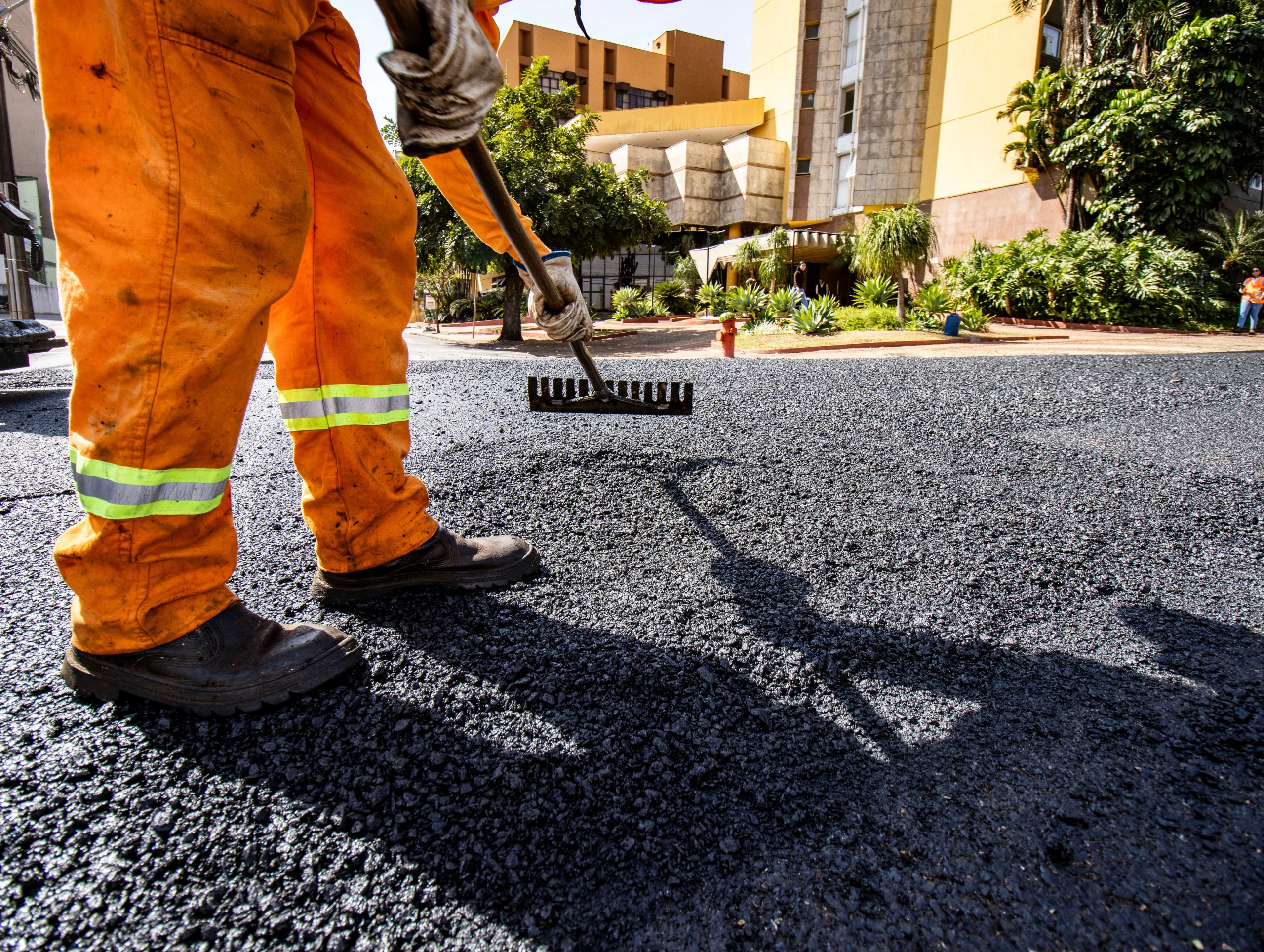
We lay the asphalt at proper depth, in a base and top course where called for, and compact it with a roller for density.
Edges and Transitions
We finish edges and grade smooth transitions at the garage and street.
Guidance
We tell you when it's safe to drive on and when it can be sealed.
Maintenance and Sealing
Asphalt needs periodic sealcoating to protect against water, UV, and oxidation, usually every 3 to 5 years. New asphalt should not be sealed too soon; it needs to cure first, generally 6 to 12 months. Keeping small cracks filled and resealing on schedule is what gets you the long end of asphalt's lifespan. Neglecting it lets water into the base, which is what leads to potholes and failure.
Repair, Resurface, or Replace
Not every worn asphalt driveway needs a full replacement. Small cracks can be filled, and a driveway with a sound base but a worn surface can be resurfaced with a new top layer (a mill and overlay). When the base has failed, with alligator cracking, potholes, and widespread sinking, a full rebuild is the lasting fix. We assess it and tell you honestly which one makes sense.
Asphalt Options
Full Replacement
Complete excavation, new compacted stone base, and fresh asphalt at proper depth. The right fix when the base has failed.
Mill and Overlay
The old surface is ground down and a fresh top layer is applied. Works when the base is sound but the surface is worn.
Crack Filling & Patching
Spot repairs for isolated cracks and damaged sections before they spread to the base.
Belgian Block Apron
A stone border at the street or garage for a finished, durable edge that frames the driveway.
What Affects the Cost
Asphalt driveway pricing depends on a handful of things.
Size & Removal
The size of the driveway and how much removal and excavation is needed.
Base & Asphalt Depth
The depth of the base and the asphalt itself.
Drainage & Grading
Any drainage or grading work required.
Aprons & Access
Any Belgian block apron or borders, plus access.
A straightforward replacement on a sound base costs less than a full rebuild with new drainage. Asphalt is generally the most affordable driveway material. We give a free written estimate after seeing the site.
Frequently Asked Questions
How long does an asphalt driveway last?
How much does asphalt paving cost?
When should I seal a new asphalt driveway?
Asphalt or concrete, which is better?
Can I pave asphalt over my existing driveway?
Why is my asphalt cracking or getting potholes?
Related Services
Looking at a different driveway material? Take a look at these related pages.
Ready To Get Started
Planning An Asphalt Driveway?
Call us at (908) 263-8265 or request a free estimate. We'll look at the site, confirm base and depth needs, and give you a straight written price.